
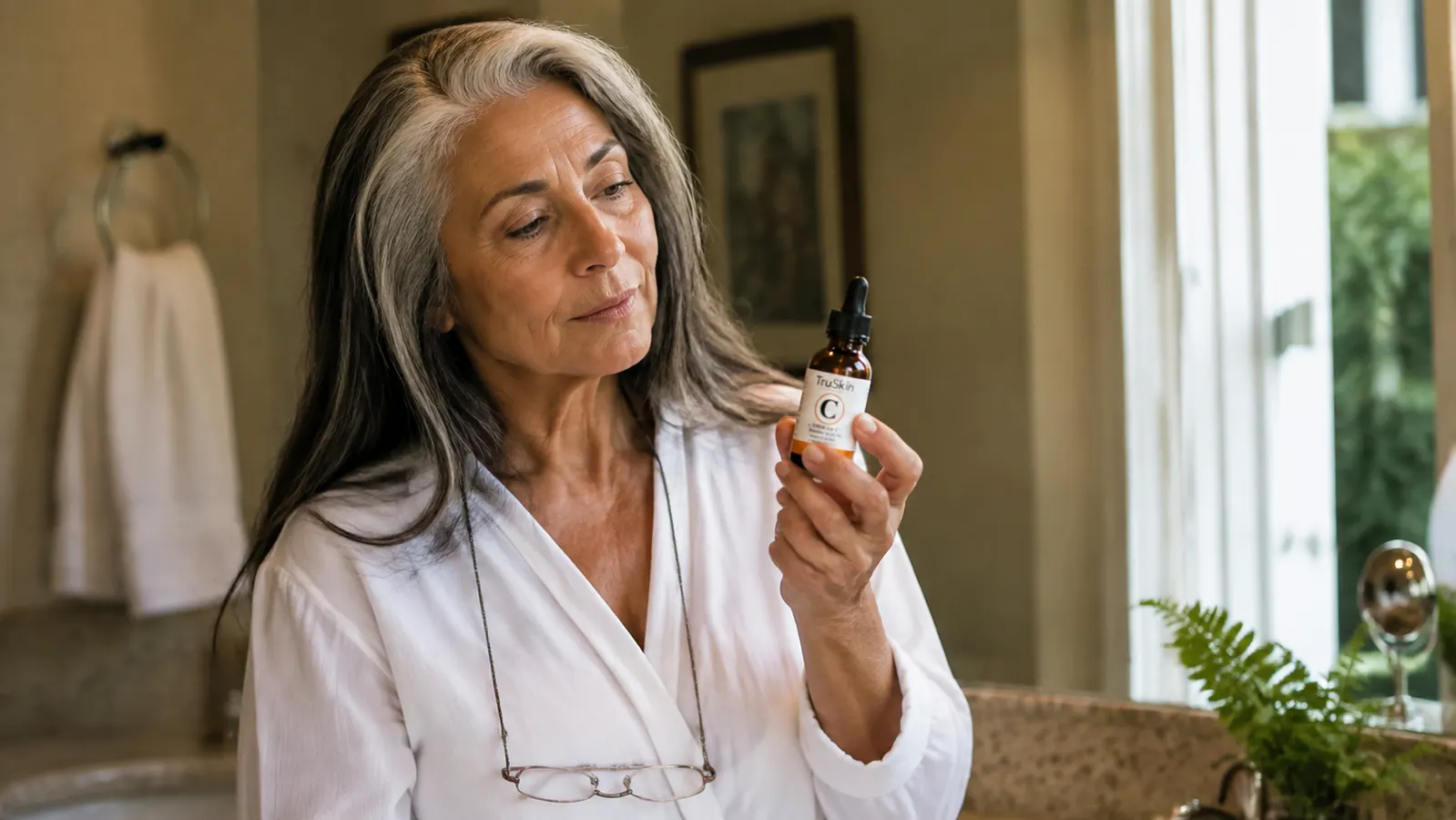
My mailbox gets more questions about this pairing than almost any other product decision on this site: is TruSkin's Brightening Vitamin C Serum actually comparable to Obagi's Professional-C line, or am I settling for less just because I don't want to pay the clinical-brand price? After going back and forth between both bottles over several months, including a stretch where I borrowed a friend's Obagi to test side by side, I have an honest answer, and it is not the one either brand's marketing department would prefer.
Short version, since I know some of you skip straight to it: TruSkin is the serum I actually finish, refill, and recommend to my sister. Obagi is the stronger, more clinically formulated option, and if your skin can tolerate it and the cost difference genuinely doesn't change whether you'll use it daily, it will likely outperform TruSkin on raw brightening power. Neither answer is wrong. It depends on what you're actually optimizing for, and that's what the rest of this comparison walks through.
| TruSkin Vitamin C Serum | Obagi Professional-C | |
|---|---|---|
| Vitamin C form | Sodium ascorbyl phosphate, a gentler vitamin C derivative, blended with hyaluronic acid and vitamin E | L-ascorbic acid, the most researched and most potent form, in a pharmaceutical-grade formulation |
| Packaging and oxidation resistance | Glass dropper bottle, lets in air with every use | Opaque airless pump built to slow oxidation |
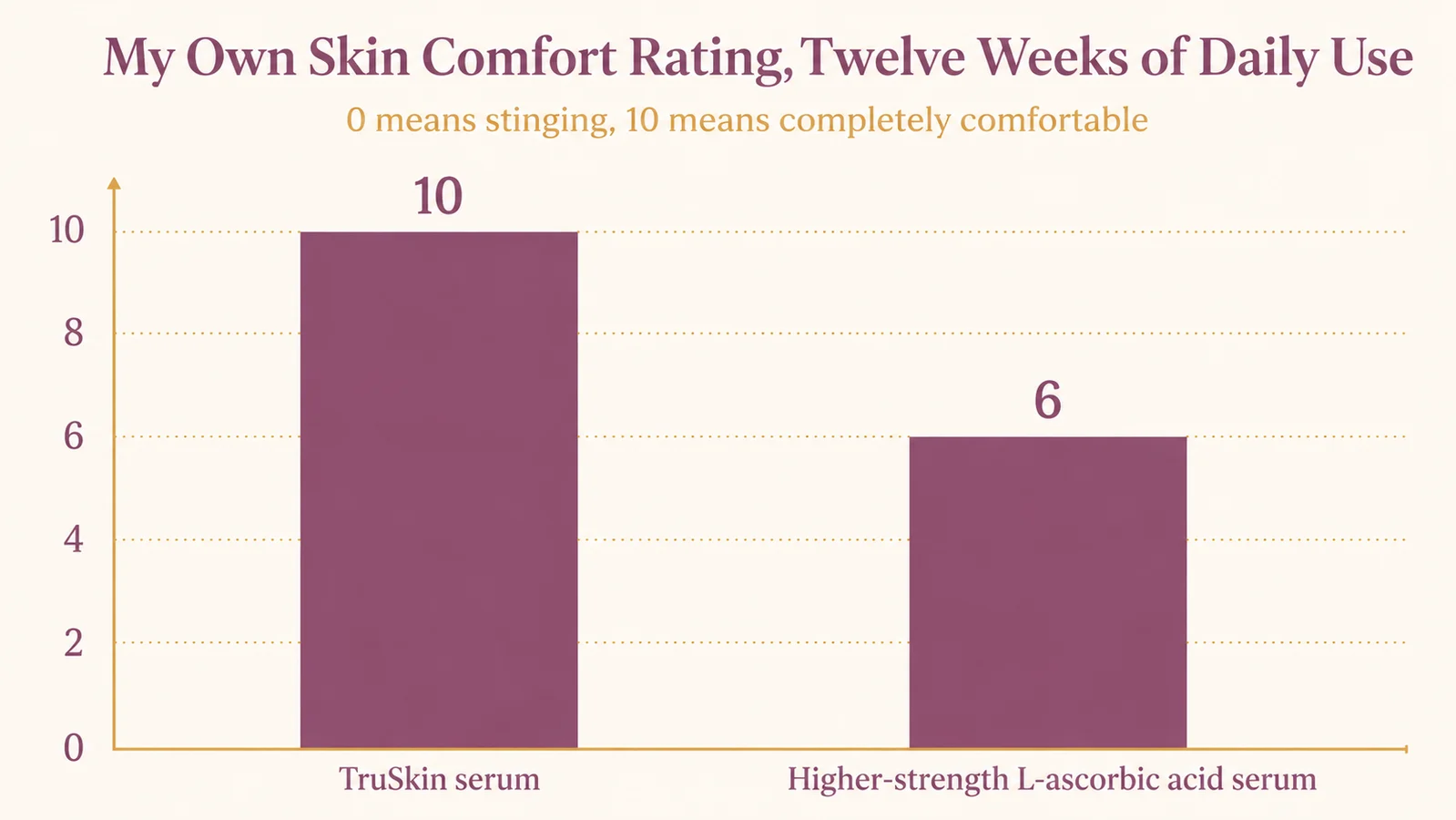
| Tolerance for reactive skin | Never once caused stinging or flushing across twelve weeks of daily use | Higher concentration can cause a warming or stinging sensation, especially at first |
| Cost relative to each other | Roughly a third of what I've seen the clinical-brand option run per bottle | Several times TruSkin's per-bottle cost |
| Texture and absorption | Light, slightly tacky for thirty seconds, then no residue | Also lightweight and silicone-free, absorbs at a similar speed |
| Where it's sold | Widely stocked on Amazon with consistent availability | Sold mainly through dermatologist offices and the brand's own site |
| Public review track record | Well over a hundred and fifty thousand ratings averaging 4.4 stars | Thinner public review volume, spread across professional retailers |
| Formulation pedigree | Broad, gentler blend meant to suit a wide range of skin types | Built by a dermatologist-founded brand with in-house stability and penetration testing |
Where TruSkin Wins
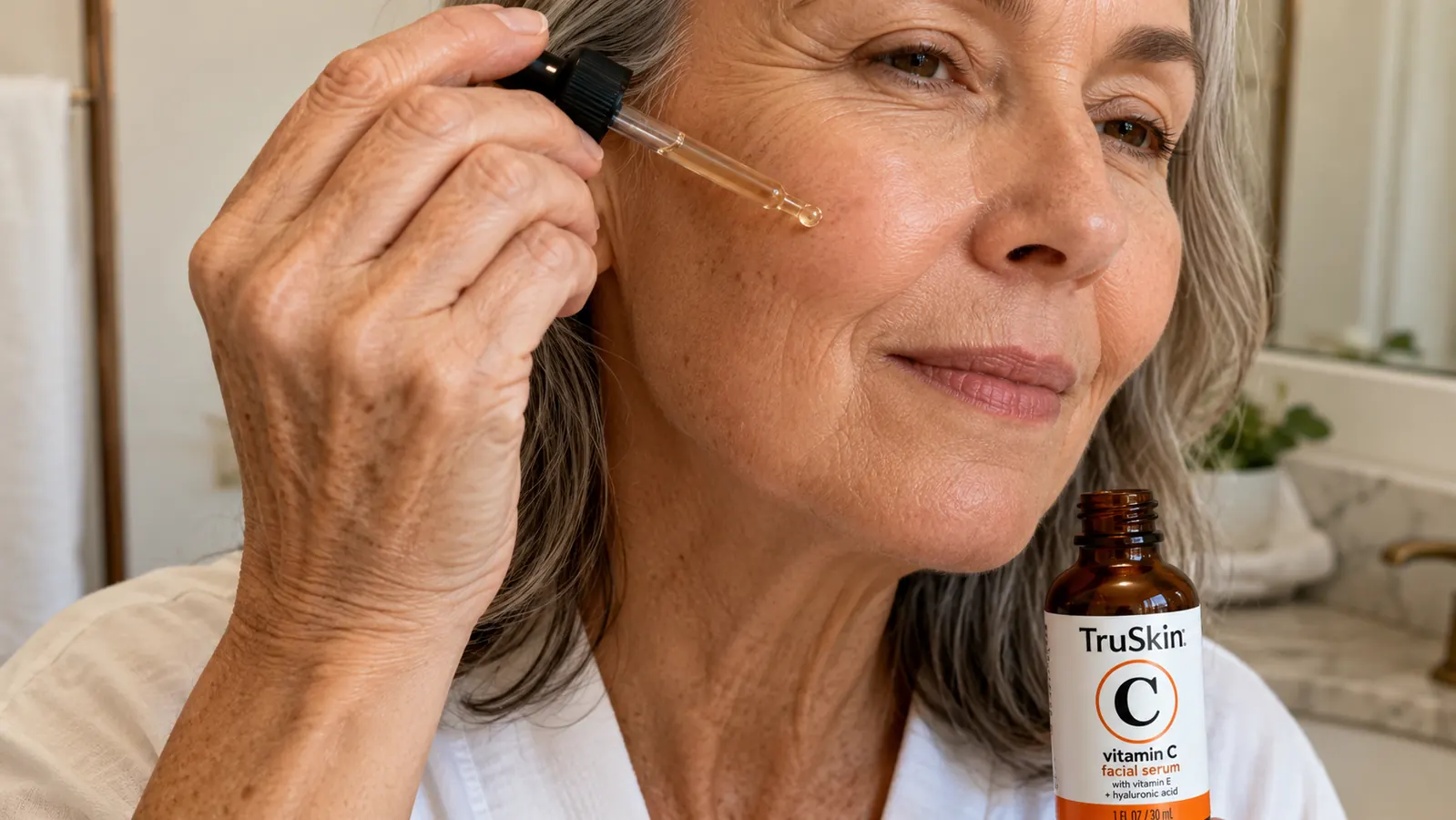
TruSkin's biggest advantage isn't a single ingredient, it's tolerance. In three months of daily use I never once had the stinging or flushing that a couple of pricier vitamin C serums have given me over the years, and that gentleness comes directly from a lower, better-buffered concentration of vitamin C blended with hyaluronic acid and vitamin E. For skin over fifty that has gotten more reactive with age rather than less, that matters more than a headline percentage on a label.
The other place TruSkin pulls ahead is simple availability and track record. It ships from Amazon with consistent stock and quick delivery, and it has accumulated well over a hundred and fifty thousand ratings averaging 4.4 stars, which is a far larger sample of real, ordinary skin than most clinical-brand review counts offer. TruSkin also costs roughly a third of what I've seen Obagi's Professional-C line run per bottle, and over a year of daily use that adds up to a real difference, not a rounding error.
TruSkin's dropper is also just easier to live with day to day, on the mornings when my hands are stiffer than usual. I can steady the bottle against the counter and get a clean draw without fumbling, and the label is large enough to read without hunting for my glasses first. Obagi's pump requires a firmer, more controlled press, which is a minor thing on a good day and a genuine annoyance on a bad one.
Where Obagi Wins
I'd be lying if I said concentration doesn't matter, because it does. Obagi's Professional-C serum uses a meaningfully higher percentage of pharmaceutical-grade L-ascorbic acid, the form of vitamin C with the most research behind it for visible brightening, and it comes packaged in an opaque airless pump built specifically to slow the oxidation that eventually dulls any vitamin C formula. TruSkin's glass dropper looks nicer on a bathroom counter, but every time you open it, air gets in, and I watched my own bottle darken slightly by week ten.
Obagi also carries the pedigree of a dermatologist-founded brand that built its formulas around in-house stability and penetration testing, rather than a broad, gentler blend meant to suit as many skin types as possible. If you've tolerated stronger actives before, retinoids or higher-percentage AHAs, without much drama, your skin may simply be a candidate for more concentration than TruSkin offers, and Obagi is built for exactly that kind of skin.
Obagi's airless pump also holds up better for anyone who travels often or keeps a bottle in a gym bag. Because the formula never contacts air until it is dispensed, it tolerates temperature swings and rough handling better than TruSkin's glass dropper does, which I would treat carefully in a hot car or a checked suitcase rather than tossing it in with everything else.
Not Sure Your Skin Needs the Clinical-Strength Price Tag?
If gentle, consistent, and noticeably more affordable sounds like the better fit for your skin, TruSkin's serum is the one that earned its spot on my counter and stayed there. Here is where I check today's price before I reorder.
Amazon Check Today's Price on Amazon →How I Actually Tested Both
I did not base this comparison on a single day of side-by-side swatching. I used TruSkin's serum every morning for twelve weeks as my primary routine, the same stretch I cover in my full long-term review, and then spent an additional six weeks alternating mornings with my friend's Obagi Professional-C bottle so I could feel the difference on the same skin under the same conditions. Same cleanser, same moisturizer, same sunscreen, same bathroom mirror and lighting for every check-in, because a fair comparison has to hold everything else steady.
I also asked my friend, who has used Obagi for well over a year, to keep her own running notes during those six weeks so I was not relying only on my own impressions. She noted the same warming sensation I felt on first use, which faded after roughly ten days, along with a texture she describes as slightly thinner and less tacky than TruSkin's. Neither of us experienced peeling or visible irritation past that first adjustment period, which tells me both formulas are reasonably well tolerated once skin gets used to them.
The Ingredients Beyond Vitamin C
Vitamin C percentage gets all the attention, but it is not the only ingredient doing work in either bottle. TruSkin pairs its vitamin C with hyaluronic acid, vitamin E, and a handful of plant extracts including witch hazel and jojoba oil, and in my experience the hyaluronic acid is doing more of the visible, day-to-day plumping than the vitamin C itself. My skin looked less crepey within the first two weeks, well before any brightening showed up.
Obagi's Professional-C formula leans harder into the vitamin C itself and skips most of the supporting cast TruSkin includes, which is consistent with its more clinical, single-purpose approach. That is neither better nor worse on its own, it just means TruSkin is doing double duty as a light hydrator while Obagi is doing one job with more force. If your skin also needs the hydration boost, TruSkin's blend may end up doing more for you day to day than the raw percentage difference suggests.
The Real Cost Math, No Sticker Price Required
You do not need an exact dollar figure to do this math, and I would not trust one anyway since prices shift constantly. What matters is the ratio. TruSkin runs roughly a third of what Obagi's Professional-C costs per bottle in my own shopping history, and both bottles last me about the same two and a half months at my usage rate, four to five drops each morning. Carry that ratio across a full year of daily use and the gap between the two is not trivial, it is closer to what I spend on a quarterly dermatologist copay.
For some households that difference is meaningless, and if that describes yours, I would lean toward Obagi without much hesitation given the stronger clinical formulation behind it. For the rest of us on a careful monthly budget, that gap is exactly the kind of recurring cost that quietly adds up when you are already paying for sunscreen, a retinol, a moisturizer, and everything else a real routine after fifty requires. TruSkin lets you keep vitamin C in the rotation without crowding out the rest of the routine.

What the Concentration Difference Actually Feels Like
Numbers on a label don't tell the whole story, so here's what the difference felt like on my own face. TruSkin went on light, slightly tacky for the first thirty seconds, and never once made my cheeks flush. When I borrowed a friend's bottle of Obagi's Professional-C to compare directly, I felt a faint warming sensation for the first minute, not painful, but noticeable in a way TruSkin never was. That's the tradeoff in a sentence: more active ingredient, more sensation, and for some skin, a faster visible result.
The other thing worth naming honestly is how each serum behaves after several hours. TruSkin stayed matte and unnoticeable under my moisturizer and concealer well into the afternoon. Obagi, at the higher concentration, left a very faint tackiness that returned by midday on a couple of the more humid mornings, though it never affected how my makeup wore. It is a small detail, but if you top your serum with makeup every day, it is worth knowing before you switch.
The friend who let me test her Obagi bottle has used it for over a year and swears her sun spots faded more dramatically and more quickly than mine did during my own twelve-week TruSkin trial. I believe her. Her skin also tolerates a nightly retinol without issue, mine does not, and that single fact probably explains more about which serum is right for each of us than any ingredient percentage could.
The stronger serum isn't automatically the better serum. It's the better serum for the skin that can handle it.
Who Should Buy Which
Reach for TruSkin if your skin has gotten more reactive with age, if you're new to vitamin C serums and want to see whether the category earns a permanent spot in your routine before committing to a pricier bottle, or if a lower monthly cost is what actually determines whether you use a product consistently. Consistency beats concentration almost every time, and TruSkin is the easier bottle to stay consistent with.
There is also a reasonable middle path some readers land on: start with TruSkin to confirm your skin tolerates a vitamin C serum at all and that you'll actually stick with the habit, then consider stepping up to something like Obagi later once you know your skin can handle more concentration. I know at least two women in my Tuesday walking group who took exactly that route, and neither regrets starting gentle.
Reach for Obagi if you've already proven your skin tolerates stronger actives without flushing or peeling, if you want the fastest realistic fading on stubborn, longstanding sun spots, and if the cost difference genuinely won't change whether you use it every day. For a broader look at why this ingredient category holds up under scrutiny at all, I laid out ten specific reasons vitamin C keeps earning its place in a mature skincare routine, regardless of which bottle you land on.
The Gentler, More Affordable Option Is Still the One I Reach for Every Morning
TruSkin's serum did not need a clinical price tag to earn its place on my counter. If you want to see current availability and today's price, this is the listing I order from.
Amazon Check Today's Price on Amazon →