
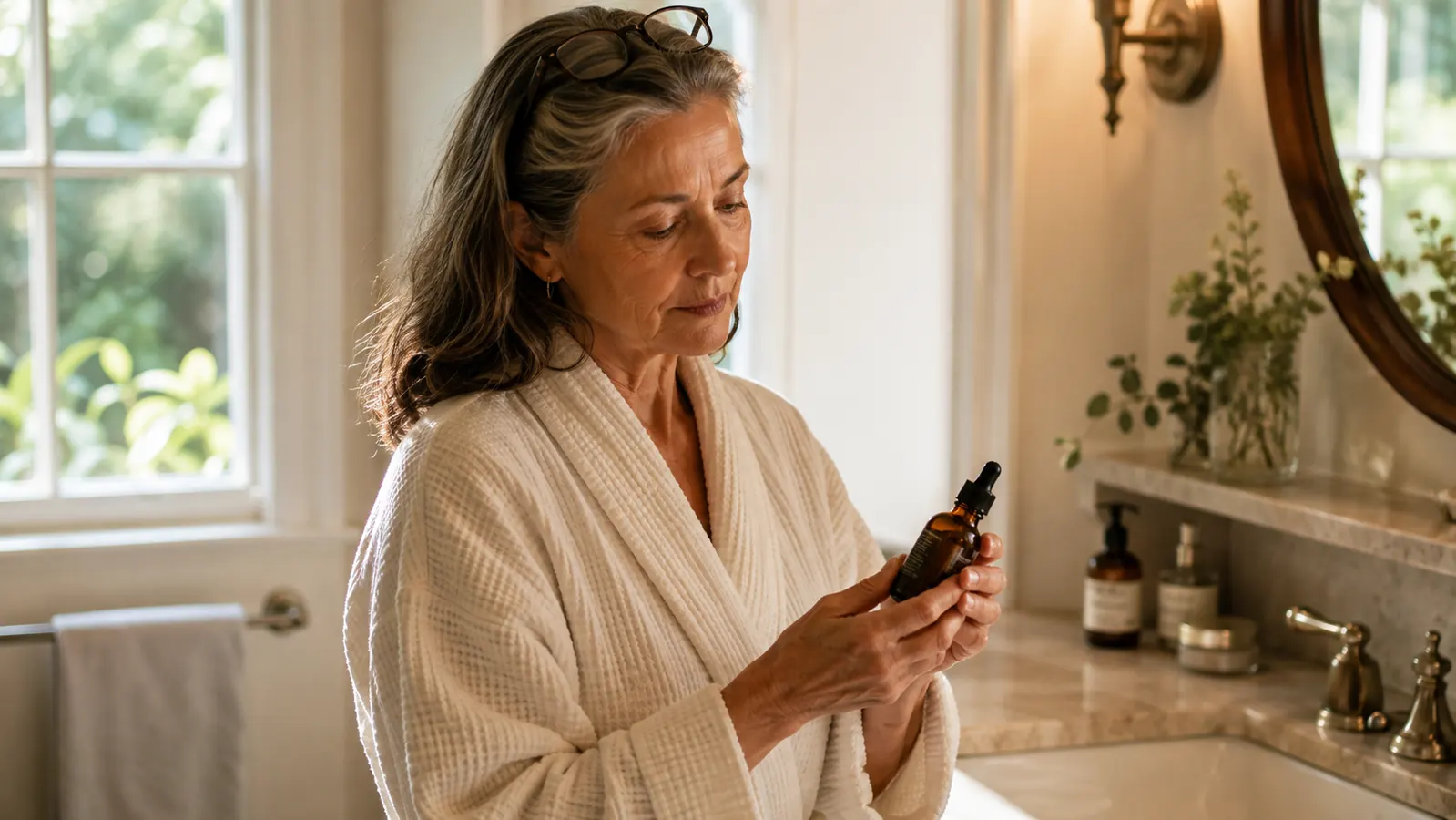
I have spent enough mornings squinting at sun spots on the backs of my hands to know that most vitamin C serums promise more than they deliver. TruSkin's Vitamin C Serum is not one I expected to still be reaching for after three months, but here I am, still reaching for it every single morning. My skin carries about thirty years of Florida sun without much of a hat to show for it, and the proof shows up plainly across my cheekbones and the tops of both hands.
This is not a seven-day miracle story, and I would not trust it if it were. It is what actually changed, and what did not, after using TruSkin's serum every morning for twelve weeks on skin that has earned every one of its spots honestly. I kept notes on my phone the whole way through, because at sixty-two I have learned that memory alone flatters a product it should not.
The Quick Verdict
A genuinely useful, low-fuss vitamin C serum that gradually faded my age spots and never once irritated my easily-annoyed skin, though the open dropper lets in more air than I would like.
Amazon Check Today's Price →Tired of Vitamin C Serums That Promise Everything and Deliver a Sting Instead?
I have tried the department store versions that cost more than my electric bill and the ones that made my cheeks flush red within a minute. TruSkin's serum did neither. If you want to see today's price and current availability before you read the rest of my notes, here is where I found it.
Amazon Check Today's Price on Amazon →How I've Used It
My routine has not changed in twelve weeks, which is part of why I trust what I am about to tell you. After cleansing with lukewarm water and patting my face dry, never rubbing, I use four to five drops of TruSkin's serum across my cheeks, forehead, and the backs of both hands. I press it in rather than swipe it, then wait a full two minutes before my moisturizer goes on top.
The glass dropper is manageable for my hands most mornings, though on days when my knuckles are stiff I steady the bottle against the bathroom counter to get a clean draw instead of trying to hold it steady in the air. It is a small thing, but if you deal with any hand stiffness, know that a dropper takes a little more coordination than a pump.
I chose mornings over evenings on purpose. Vitamin C has some evidence behind it as a mild antioxidant layer under sunscreen, and since I am already committed to daily SPF, it made sense to stack them rather than add another step at night when I am more likely to skip it entirely. I keep the bottle in the medicine cabinet, out of direct sunlight, because heat and light both speed up how quickly a vitamin C formula turns.
TruSkin's serum absorbs faster than I expected from something with a slightly tacky first thirty seconds. There is no pilling under my moisturizer, no greasy film left on my pillowcase, and the citrus scent fades within a few minutes so it never lingers into the rest of my morning.
What's Actually in the Bottle
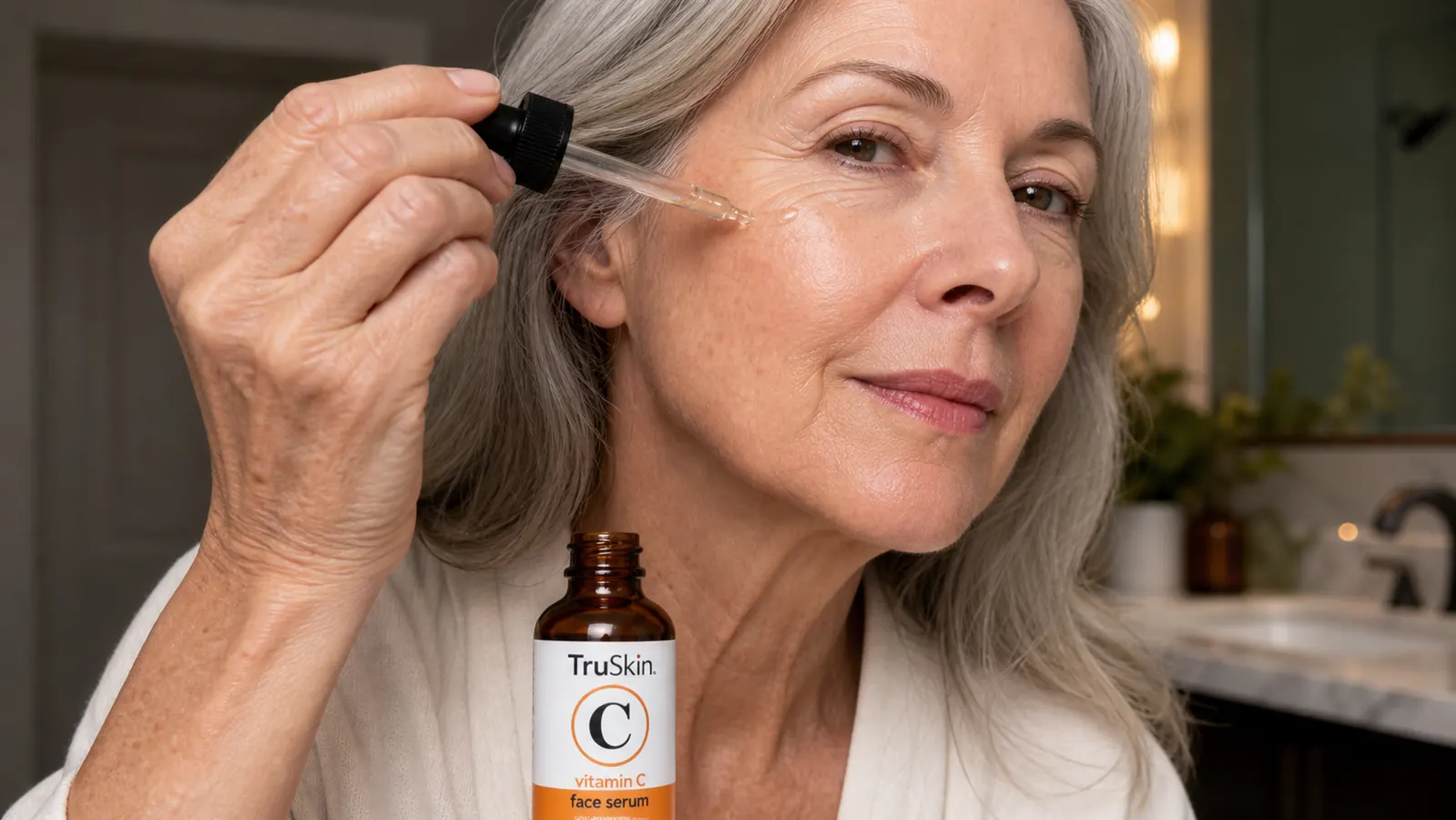
TruSkin leads with vitamin C, paired with hyaluronic acid, vitamin E, and a handful of plant extracts including witch hazel and jojoba oil. It is not the pure, unstable form of ascorbic acid that some serious dermatology-brand serums use, which is likely why it never stung my face the way a couple of pricier bottles have over the years.
The hyaluronic acid is doing more of the day-to-day work than people expect from a vitamin C serum. It is the reason my skin looked plumper and less crepey by the second week, well before any brightening was visible. Vitamin E rounds it out as a supporting antioxidant, and honestly I think that combination, rather than the vitamin C alone, is why my skin tolerated this so well from day one.
The tradeoff, and I want to be upfront about it, is that a gentler formulation is also a gentler-acting one. If you are chasing the fastest possible brightening with a strict tolerance for redness and peeling, TruSkin's serum will feel slow compared to a stronger clinical concentration. I found that acceptable at my age, because a serum I can actually use every day beats a strong one I abandon after two weeks. I go into strength and formulation differences in more detail in my side-by-side against Obagi's Professional-C line, if you are weighing whether the splurge option is worth it.
The First Six Weeks
Week one was uneventful, which for a woman with reactive skin is a compliment. No stinging, no flushing, just a light citrus smell and slightly tacky skin for the first half hour. By week two my skin looked a touch more even in ordinary daylight, though I would not have bet money on it being the serum and not just a good night's sleep.
By week four, the difference stopped being something I had to squint to see. The overall tone across my cheeks looked less blotchy in the bathroom mirror, and a friend at my Tuesday walking group asked, unprompted, whether I had changed something in my skincare. I had not told a single person I was testing TruSkin's serum at that point, so that comment carried some weight with me.
Texture changed before color did. My skin felt smoother under my fingertips by week five, in a way that made my usual moisturizer glide on differently. The deeper, more stubborn spots on my hands were still stubbornly present at this stage, and I want to be honest that hands took longer to respond than my face.
The Middle Stretch, Weeks Seven Through Nine
This was the part nobody warns you about, mostly because it is not dramatic enough to write up. Progress slowed. My cheek spots did not visibly change much between week six and week eight, and I remember thinking I had plateaued and wondering whether to give up and try something stronger. I am glad I stuck it out, because that plateau is normal for gradual brightening ingredients, not a sign the product stopped working.
What did keep improving during those weeks was overall glow, for lack of a better word. My skin looked less dull under kitchen lighting, which is the least flattering light in my house and therefore my honest test. By week nine I noticed the concealer I use over my worst cheek spot needed a slightly lighter shade, a small, boring detail that told me more than any mirror check did.
By Week Twelve
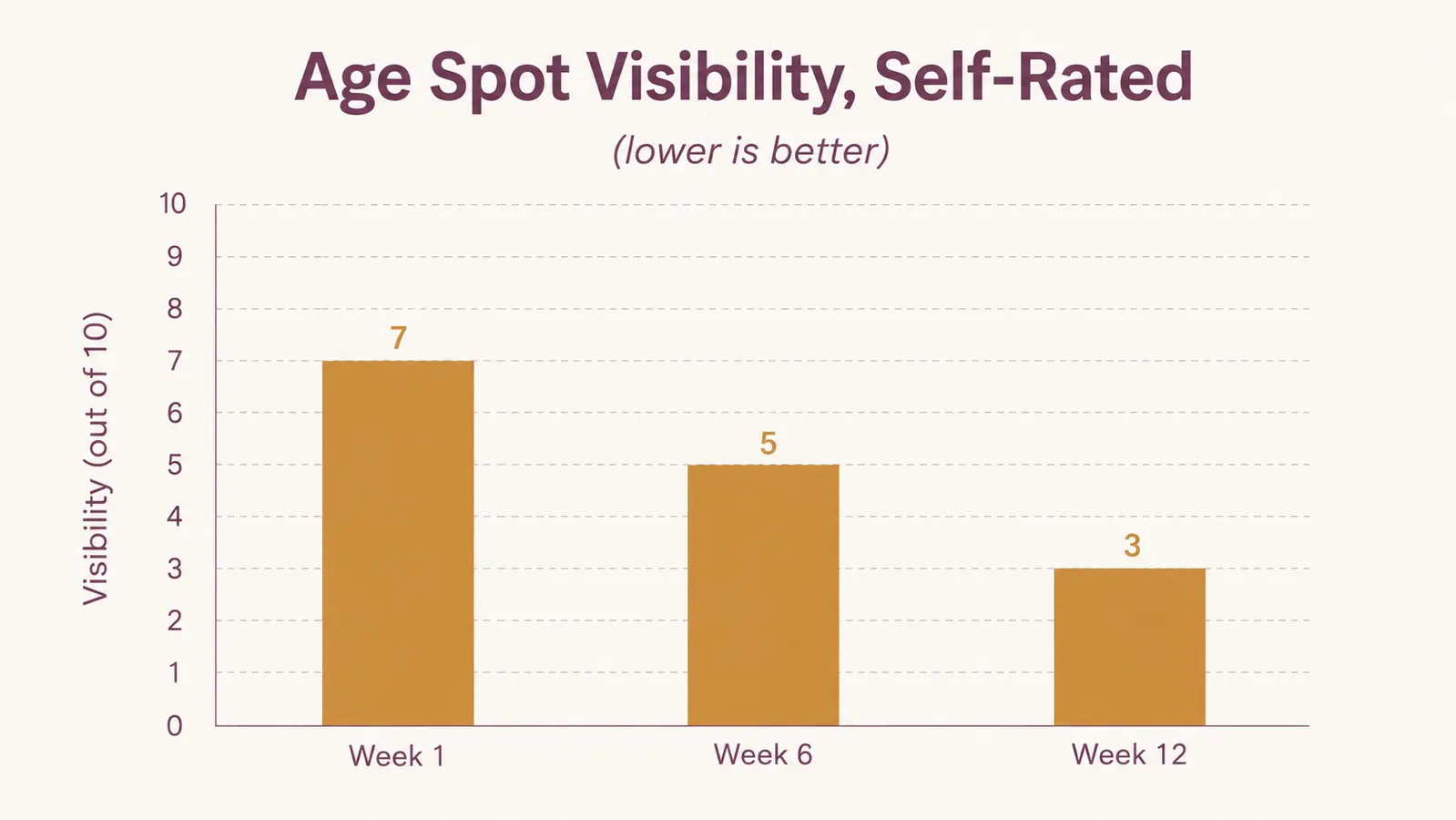
Twelve weeks in, the two largest age spots on my left cheekbone, the ones I have been covering with concealer since roughly 2019, are noticeably lighter rather than gone. I rated their visibility a seven out of ten when I started this review and a three out of ten by week twelve, using the same lighting and the same bathroom mirror each time so I was not fooling myself with a good light day.
My hands improved too, though more modestly. The backs of both hands took the brunt of decades on a boat with no gloves and no sunscreen, and TruSkin's serum evened the surrounding skin tone without erasing the darkest spots entirely. I would call that a realistic outcome, not a disappointing one. Fine lines around my eyes looked a little softer as well, likely from the hydration the hyaluronic acid was providing rather than anything the vitamin C itself was doing.
Where It Falls Short
The dropper is my one real complaint. Every time I open that bottle, air gets in, and vitamin C degrades with air exposure. By week ten the liquid had shifted from its original pale yellow to a slightly deeper amber, which is a known sign that a batch is oxidizing. It still worked, but I noticed the change and I would rather TruSkin used an airless pump the way a couple of the pricier serums do.
It also is not a sunscreen substitute, and TruSkin's own instructions say so plainly. If you are using this serum to fade age spots without also wearing daily SPF, you are working against yourself. I keep a mineral sunscreen on the counter next to it and use both, every morning, without exception.
I will also say the results, while real, are modest compared to what a dermatologist office peel or a prescription-strength option could do in the same twelve weeks. This is a maintenance and gradual-fading product, not a corrective one. Anyone expecting a dramatic before-and-after should set that expectation aside before opening the box.

What I Considered Instead
Before settling on TruSkin's serum for this review, I looked seriously at a couple of alternatives, including a pricier professional-strength option that a dermatologist's office recommended and a well-known drugstore competitor with a ferulic acid blend. Both cost noticeably more per month, and neither had the reviews from women my own age that TruSkin did. I lay out the ingredient percentages and cost-per-month math in that comparison for anyone deciding between the drugstore route and the splurge.
For readers who want the broader case for why vitamin C belongs in a routine after fifty at all, I also wrote up ten specific reasons it keeps earning its spot on dermatologists' recommendation lists, which covers the research side of things I did not want to repeat here.
What I Liked
- Never once caused stinging or flushing on my reactive, sixty-something skin
- Noticeably evened tone by week four, faded my worst cheek spot by week twelve
- Absorbs quickly with no pilling or greasy residue under moisturizer
- Light citrus scent that fades within minutes instead of lingering all day
- A dropper design manageable for most hands, even with mild stiffness
Where It Falls Short
- Glass dropper exposes the formula to air, and mine visibly darkened by week ten
- Slower and gentler than a clinical-strength serum, so results build gradually
- Deep, decades-old spots on my hands faded less than facial spots did
- Does nothing on its own without daily sunscreen layered over it
I did not need a miracle. I needed a serum I would still be reaching for at week twelve, and TruSkin's is the one still sitting on my bathroom counter.
Who This Is For
If your skin reacts badly to stronger actives, or you simply want a low-drama first vitamin C serum to see whether the category is worth your time at all, TruSkin's version is a sensible place to start. It suits anyone who wants gradual, honest improvement in tone and mild age spot fading without gambling on redness or peeling. It also suits anyone on a fixed monthly budget who still wants a routine that behaves like the pricier bottles behave. My full honest review, including the two weeks I almost gave up on it, covers a few more edge cases worth reading if you are still deciding.
Who Should Skip It
If you have deep, longstanding sun damage and want the fastest possible fading, a clinical-strength formula with a stronger concentration and an airless pump will likely outperform this one, and you should expect to pay more for it. Anyone hoping for a single product to replace sunscreen, or to erase decades-old spots entirely rather than fade them, should adjust expectations before buying anything in this category.
I would also skip it, at least for now, if you already own a vitamin C serum you like and are simply chasing a new bottle out of habit. Nothing here is different enough to justify replacing a formula that is already working for you. For a full walkthrough of building the fading routine around whichever serum you choose, my step-by-step guide to fading age spots correctly covers layering order and timing in more depth than I can here.
Three Months In, It Is Still the Bottle I Reach for Every Morning
That is not a claim I make lightly after thirty years of disappointing serums. If you want to see TruSkin's current price and check today's availability, this is the listing I have been ordering from.
Amazon Check Today's Price on Amazon →