

Twelve days in, I had the shipping box back out and the return label half printed. My cheeks had gone tight and flaky along the nose, there was a patch by my jaw that looked like I'd been out in a dry wind for a week, and I remember standing at the mirror thinking this is exactly why I stopped trying new things on my face. That bottle was CeraVe's Resurfacing Retinol Serum, and if you have read the glowing five-star reviews and nothing else, you have not read the part where week two makes you question the whole decision.
I did not return it. This is the honest version of what happened between that Tuesday and now, the parts most reviews leave out because they either quit before day twelve or they started the bottle so long ago they have forgotten what the adjustment actually felt like. I have already written a full ninety-day account of what changed on my skin over time, which you can read here if you want the long-term results in detail. This one is different. This one is about the friction, the label's silences, and who should think twice before starting.
What kept me from actually taping that box shut was mostly stubbornness, if I am being fair to myself. I had told two friends I was starting it, one of them a former coworker who had asked me to report back honestly instead of the usual polished version people post online. Writing that report back to her, week by week, ended up being the reason I kept a record detailed enough to turn into this piece.
Quick Verdict
The Quick Verdict
A genuinely effective retinol serum for mature skin, but the first two to three weeks are rougher than the packaging lets on, and the label tells you almost nothing about how to get through them.
Amazon Check Today's Price →Considering CeraVe's retinol serum? Read this before you order.
The results are real, but so is the adjustment period nobody warns you about. See today's price and current availability before you decide.
Amazon Check Today's Price on Amazon →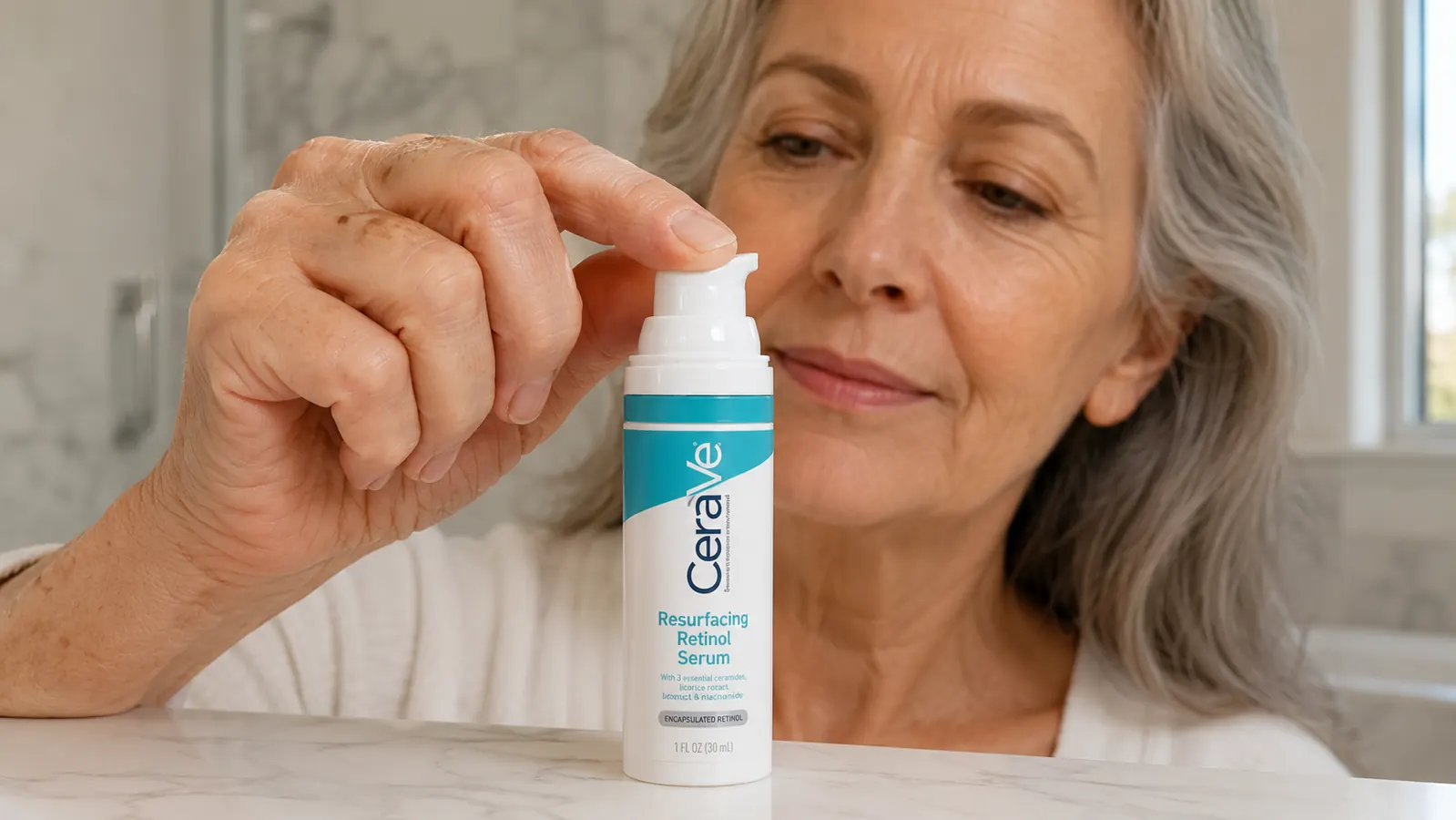
How I've Used It
I am sixty-three, combination skin that leans dry along the cheeks and jaw, and I have used prescription tretinoin exactly once in my life, for about six weeks in my forties, before giving it up when a flare of rosacea made the whole exercise not worth it. That history matters here, because it means I went into this CeraVe bottle already a little gun-shy about retinoids in general, not a first-timer who didn't know what redness looks like.
I started at three nights a week, always after washing with a plain cleanser and letting my skin dry completely first, a rule I learned the hard way years ago. Four pumps was too many, I settled on two, one for each cheek plus a light sweep out toward the jaw and temples. I kept a small notebook by the sink and wrote down what I noticed each morning, mostly because I did not trust myself to remember accurately three weeks later, and that turned out to be the right call.
By week four I had moved to five nights a week. By week eight I was using it nightly except for two rest nights I still keep in the rotation now, months later, because my skin tells me when it wants a break and I have learned to listen rather than push through out of stubbornness.
I also changed almost nothing else in my routine on purpose, which in hindsight made this whole account more useful than it would have been otherwise. Same cleanser, same moisturizer, same sunscreen every morning. If something shifted on my face, I wanted to be able to point at this one bottle and not wonder whether a new cleanser was actually the cause.
The First Two Weeks Nobody Warns You About
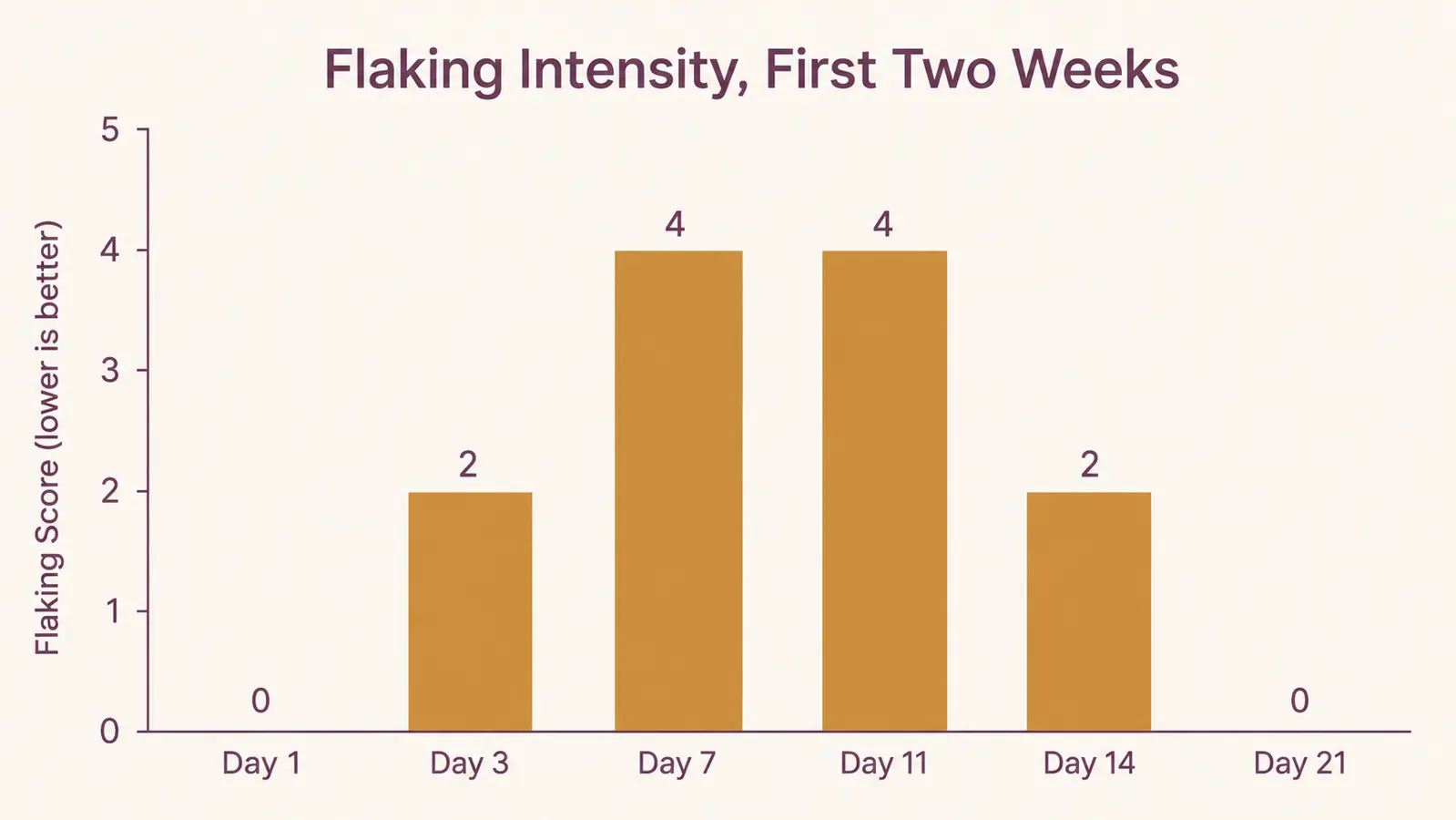
Here is the part the box does not mention. Days one through three, nothing. A little warmth, nothing worth noting. Day four, the flaking starts, small and dry along the nasolabial fold, the kind of flaking you can pick at without thinking and then regret because it leaves a red mark. By day seven it had spread to a patch below each eye and along the jaw, and my skin looked, honestly, worse than before I started. Day eleven was the low point. Day fourteen it began to ease. By day twenty-one it was gone entirely, and my skin underneath was smoother than it had been in years.
Nobody selling CeraVe's retinol serum tells you that arc happens, or that it is normal, or roughly how long it lasts. The box copy talks about hyperpigmentation, pore size, and skin texture. It says nothing about the fact that for about ten days your skin may look and feel worse before it looks better, which is exactly the window where most people quit and leave a one-star review that says 'made my skin worse, do not buy.' I understand that review now. I nearly wrote one myself.
What actually got me through it was cutting back to twice a week during the worst stretch instead of pushing through nightly use, and leaning harder on a plain moisturizer both morning and night. That is not advice CeraVe puts anywhere on the bottle or the box. It is advice I picked up from a dermatologist years ago about retinoids in general, and it applied here just as well.
I also stopped wearing any makeup with texture, no powder, nothing that would sit in the flaking and draw attention to it, for about ten days. It was a small vanity sacrifice, and it made the whole stretch easier to live with because I was not fighting the flaking and the appearance of it at the same time.
What the Label Doesn't Tell You About the Pump and the Scent
Small, practical thing, but it matters more than you'd think once you have some arthritis in your hands the way I do. The CeraVe pump is stiff for the first two or three uses, stiffer than most serum pumps I own, and needs a firm, full press rather than a light tap. Once it breaks in it dispenses evenly, one clean pump per press, no sputtering or half-doses, which I actually prefer to droppers that force you to eyeball the amount.
The scent is faint and slightly medicinal, not unpleasant but not the neutral or lightly fragranced serums I was used to either. It fades within a minute or two of application and is gone by the time I am done with the rest of my routine, but if you are sensitive to fragrance the way some of my friends are, know that it is there, even though CeraVe does not describe it anywhere in the marketing copy.
Where the Niacinamide Actually Earns Its Keep
CeraVe pairs the encapsulated retinol here with niacinamide, and I was skeptical this was just a marketing pairing until I paid attention to what it was actually doing. The niacinamide is doing calming work, not brightening work, at least on my skin. On the nights the flaking was at its worst, the redness that came with it stayed noticeably milder than it had during my brief run with prescription tretinoin years earlier, and I attribute a real part of that to what is riding alongside the retinol in this formula.
I go into the ingredient breakdown in more depth in the long-term piece, including how the licorice root extract behaves over months rather than weeks, so I will not repeat all of it here. What I will say for this honest accounting is that the niacinamide is the reason I was able to keep going through the rough stretch at all. Without it, I think I would have stopped.
It also means CeraVe's version behaves differently on the skin than a straight, unbuffered retinol would. If you are the kind of person who reads ingredient lists before you buy, that pairing is worth knowing about going in, not discovering by accident in week two the way I effectively did.
None of this made the flaking disappear, to be clear. It is not a shield against the adjustment period. What it did was keep that adjustment from tipping into the kind of visible, angry redness that made me quit tretinoin years earlier, which is a meaningfully different experience even if the surface symptom, flaking, looked similar on the outside.
The Trade-Off Nobody Mentions in the Five-Star Reviews
Encapsulation is the whole selling point of this CeraVe serum, the idea that the retinol releases slowly overnight instead of all at once, which is supposed to mean less irritation. In my experience that is mostly true, but it comes with a trade-off nobody puts in the marketing copy, which is that results take longer to show up than with a stronger, unbuffered retinol. If you want to see a difference in three weeks, this is probably not going to satisfy you.
I was curious enough about that trade-off that I ran a side-by-side comparison against a well-known unbuffered option, which you can read in full in this comparison. Short version, the other option worked faster and irritated my skin more. CeraVe's version worked slower and was gentler about it. Neither is objectively the better choice, it depends entirely on how much you are willing to trade patience for speed.
The other trade-off is cost per month rather than cost per bottle. A one-ounce bottle, used the way I use it, two to three pumps a few nights a week at first and nightly later on, lasts me close to two months. That is a reasonable pace for a drugstore product, cheaper on a monthly basis than most of the department-store retinol serums I priced out before buying, though obviously prices shift, so check the current listing rather than trusting anything I say about it here.
There is also a patience trade-off that has nothing to do with the skin itself, and that is the mental one. Sticking with a product for three weeks while it visibly makes your face look worse takes a kind of discipline most of us are not used to exercising over a bathroom counter. I underestimated how much that part would matter going in.

What Changed Once I Stopped Fighting the Purge
The turning point for me, honestly, was giving myself permission to slow down instead of treating the flaking as a problem to push through. Once I stopped applying it nightly during the rough stretch and let my skin dictate the pace instead of a schedule I had set for myself, the whole experience got easier and the results still came, just a little later than if I had been more aggressive from day one.
Four months in now, the texture around my nose and chin, which used to catch foundation in a way that bothered me more than I ever admitted out loud, has genuinely smoothed out. The dark spot near my left temple, the one I have had since my forties, is noticeably lighter. None of that happened in the first month. Most of it happened after month two, once I had settled into a rhythm the label never once described.
What I Liked
- Encapsulated retinol is genuinely gentler than an unbuffered version once you're past the adjustment
- Niacinamide meaningfully softens the redness during flaking
- Pump dispenses cleanly and consistently once broken in
- Texture and dark spot improvements held up past the three-month mark
- Reasonable cost per month compared to department-store options
Where It Falls Short
- Days four through fourteen involve real flaking the box does not prepare you for
- The pump is stiff for the first several uses, which matters if you have arthritis
- Faint medicinal scent that fragrance-sensitive users should know about ahead of time
- Slower to show visible results than an unbuffered retinol
- One ounce runs out faster than the price suggests if you use it nightly from the start
I nearly returned it on day twelve. The version of me who quit that week would have written the same one-star review I now understand.
Who This Is For
This is a good fit for someone who has been curious about retinol but is nervous about irritation, particularly if you are past fifty and dealing with the combination of dryness and slower skin turnover that comes with that. It is also a sensible entry point if you have never used a retinoid at all and want something gentler than a prescription strength to start with, as long as you go in accepting that the first two to three weeks will test your patience before they reward it. If you are the type to keep a small notebook or set a reminder to check in on your own progress rather than judging by memory alone, you will get more out of this than someone who expects to just glance in the mirror and know.
Who Should Skip It
If you have active rosacea, very reactive skin that flares at the slightest new product, or you need visible results inside of a month for an event or a trip, this is not the right pick right now. It is also not the one to reach for if you already know from experience that any flaking sends you straight back to the return page, because that stretch is close to unavoidable with any retinol, CeraVe's included, and there is no version of this review that can promise you skip it entirely. And if you are simply not willing to keep something on the shelf through a rough two weeks before judging it, save yourself the frustration and look elsewhere.
Still think the first two weeks might be worth it?
If a slower, gentler retinol with a real track record past the ninety-day mark sounds like your speed, check today's price and see if it's in stock.
Amazon Check Today's Price on Amazon →