

I bought my first bottle of TruSkin Vitamin C Serum after reading almost two hundred reviews in one sitting, which is its own kind of unhinged behavior, but I wanted to know what the five-star crowd wasn't saying. Somewhere around review number sixty, a pattern showed up that none of the marketing photos mentioned: people kept talking about how it smelled, and how the bottle didn't look the same at the end as it did on day one. Nobody was lying about the brightening. They just weren't telling the whole story.
I'm sixty-two, my sun damage is mostly on my cheeks and the backs of my hands from three decades of gardening without a hat, and I've been through enough serums to know that the honest review is never the one with a filter on it. So I bought a bottle of TruSkin with my own card, used it every morning for ten weeks, and wrote down the parts that surprised me, good and bad. This is the review I wish someone had written before I opened the box.
The Quick Verdict
A genuinely brightening, well-priced vitamin C serum with a strong opening scent and a short shelf life once it's open, both of which matter more on mature skin than the marketing lets on.
Amazon Check Today's Price →Curious if your skin reacts the way mine did?
TruSkin's Vitamin C Serum is the one I keep going back to for the brightening, even knowing its quirks going in. See today's price and current availability on Amazon before you decide.
Amazon Check Today's Price on Amazon →How I've Used It
My routine was deliberately boring, because boring is how you actually learn something. Cleanser, four drops of TruSkin patted onto damp skin, a two-minute wait, then whatever moisturizer I was rotating through that month, and sunscreen every single morning regardless of the forecast. No retinol layered on top during the test window, because I wanted to isolate what the vitamin C was actually doing rather than crediting it for someone else's work.
I kept the bottle in the same spot on my counter for the first three weeks, which, as you'll read below, turned out to be a mistake I'd make differently now. I also used it exclusively in the morning, since that's when most people layer vitamin C for the antioxidant protection against the day's sun exposure, and I wanted my results to reflect how the product is actually marketed to be used, not some workaround.
Ten weeks isn't long enough to call anything permanent, and I want to be upfront about that before you read another word. But it's long enough to notice a pattern, and long enough to go through the full life of one bottle from first drop to last, which turned out to matter more than I expected.
The Smell Nobody Warns You About
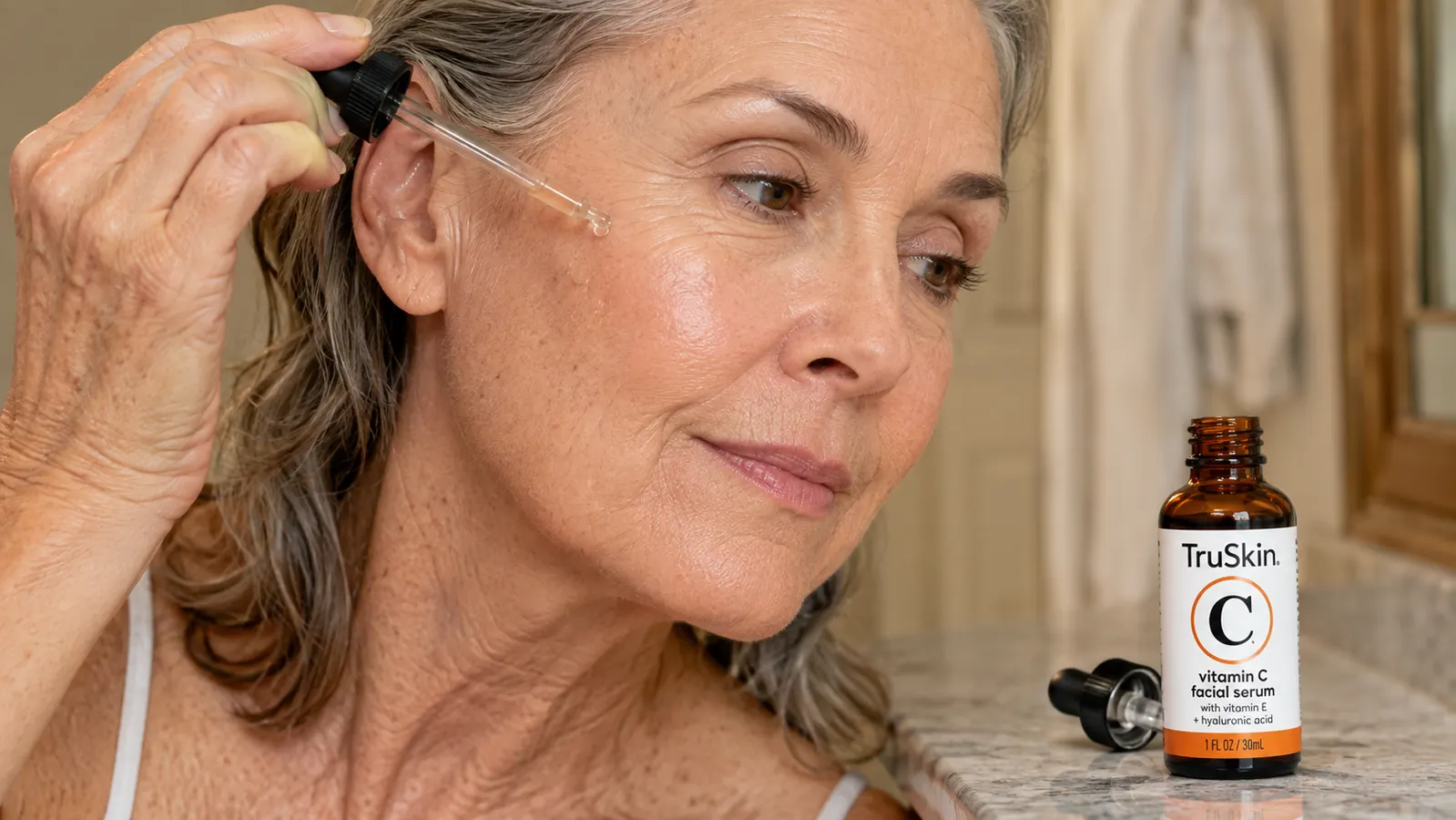
Here's the part almost every glowing review skips past in one line, if it mentions it at all. TruSkin has a noticeable scent when you first open the bottle, a slightly sweet, slightly chemical smell that some people compare to hot dogs, of all things, and others describe as more like a citrus cleaning product. It's not pleasant exactly, but it's also not what I'd call offensive, and it fades within a minute or two of application. Still, if you're someone who reacts badly to fragrance or who has a sensitive nose in the morning before coffee, this is worth knowing before the bottle arrives, not after.
The smell comes from the combination of L-ascorbic acid, the active form of vitamin C, and the plant extracts TruSkin adds for the brightening blend, including orange stem cell extract and vitamin E. L-ascorbic acid is simply an unstable, reactive ingredient by nature, which is exactly why it works and exactly why it smells like something is happening in that bottle. A serum with zero scent and zero color change is often one where the vitamin C has already broken down before you bought it, so in a strange way, the smell is a small sign of potency rather than a flaw.
That said, I noticed the scent got sharper, not milder, by week six, which is the first clue that something was shifting inside the bottle. I want to be honest that this bothered me more than the marketing prepared me for. Nobody puts "has a smell you'll need to get used to" on the product page, and they should, especially for a site full of readers who are used to buying serums that promise to smell like nothing at all.
I asked my sister, who's four years older than me and considerably more sensitive to fragrance, to smell the bottle at week one and again at week six without telling her which was which. She picked the week-six sample as "stronger and a little sour" without hesitation, which told me my own nose wasn't imagining the shift. That kind of unscientific, kitchen-table test is honestly more useful than most lab claims a bottle could print on its label.
Why the Bottle Turns Color, and What That Actually Means
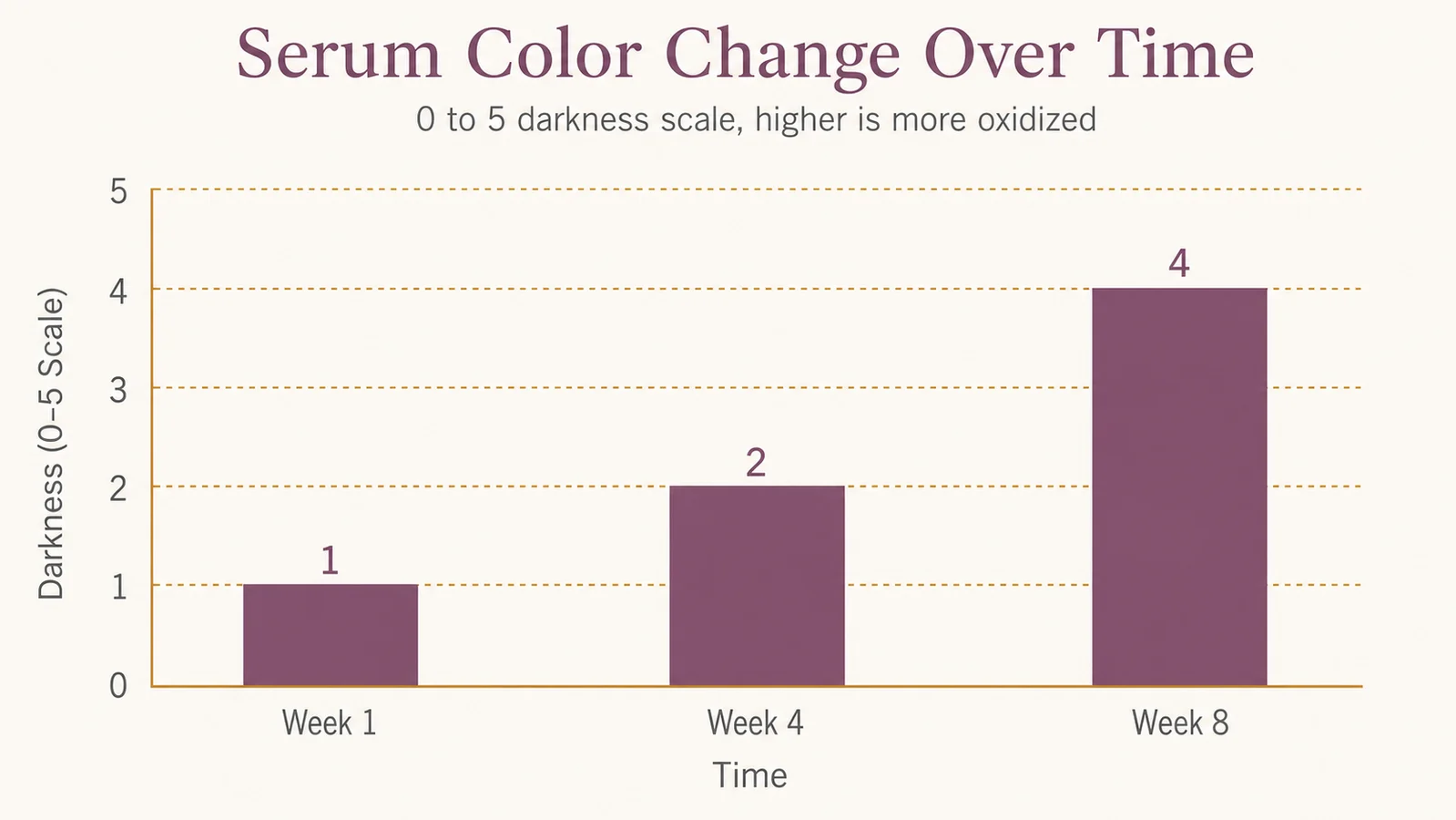
The second thing nobody mentioned before I bought it: my TruSkin serum did not stay the same pale yellow it started as. By week four it had shifted to a light amber, and by week eight it had deepened further into a color closer to weak tea. This is oxidation, and it's the single most predictable thing that happens to any L-ascorbic acid vitamin C serum once air and light start reaching it, which happens every time you open the cap.
Color darkening on its own doesn't automatically mean the serum has gone bad. A gentle shift from pale yellow to light amber over several weeks is normal aging, not spoilage, and TruSkin's formula is no different from most L-ascorbic acid serums on that front, including ones that cost three or four times as much. What tells you it's actually turned is a strong vinegar-like smell replacing the original scent, or a texture that's gone grainy or separated. I never hit that point in ten weeks, but I was watching for it, and I'd tell anyone using this serum to watch too rather than assuming a darker bottle is automatically a dead one.
Where I'll push back gently on TruSkin here: a serum this reactive to light and air deserves a genuinely opaque, airless pump bottle, and the dropper bottle it ships in isn't that. Every time you open the dropper, you're letting oxygen in and speeding up the very process the packaging should be slowing down. It's a real tradeoff for the price, and one I'd like to see the brand fix before I'd call this a five-star product outright.
The Dropper and Whether Arthritic Hands Can Manage It
This is the kind of detail that never shows up in a twenty-five-year-old's review, and it should, because a lot of us reading this are dealing with some stiffness in our fingers by mid-morning. The dropper bulb on TruSkin is soft enough to squeeze without much resistance, and the neck of the bottle is wide enough that I never fumbled it trying to draw up serum one-handed while my other hand held my coffee. That's a genuinely small design win, but it's the kind of thing that decides whether a bottle actually gets used every day or ends up abandoned in a drawer.
The label is printed in a reasonably readable size too, dark text on a light background rather than the pale gray-on-white so many serums use, so I never had to hunt for my readers just to confirm which bottle I'd grabbed off the shelf. It's not a large thing, but on a counter crowded with three or four bottles that all look similar first thing in the morning, it matters more than the brand probably realizes.
How I Store It So It Actually Lasts
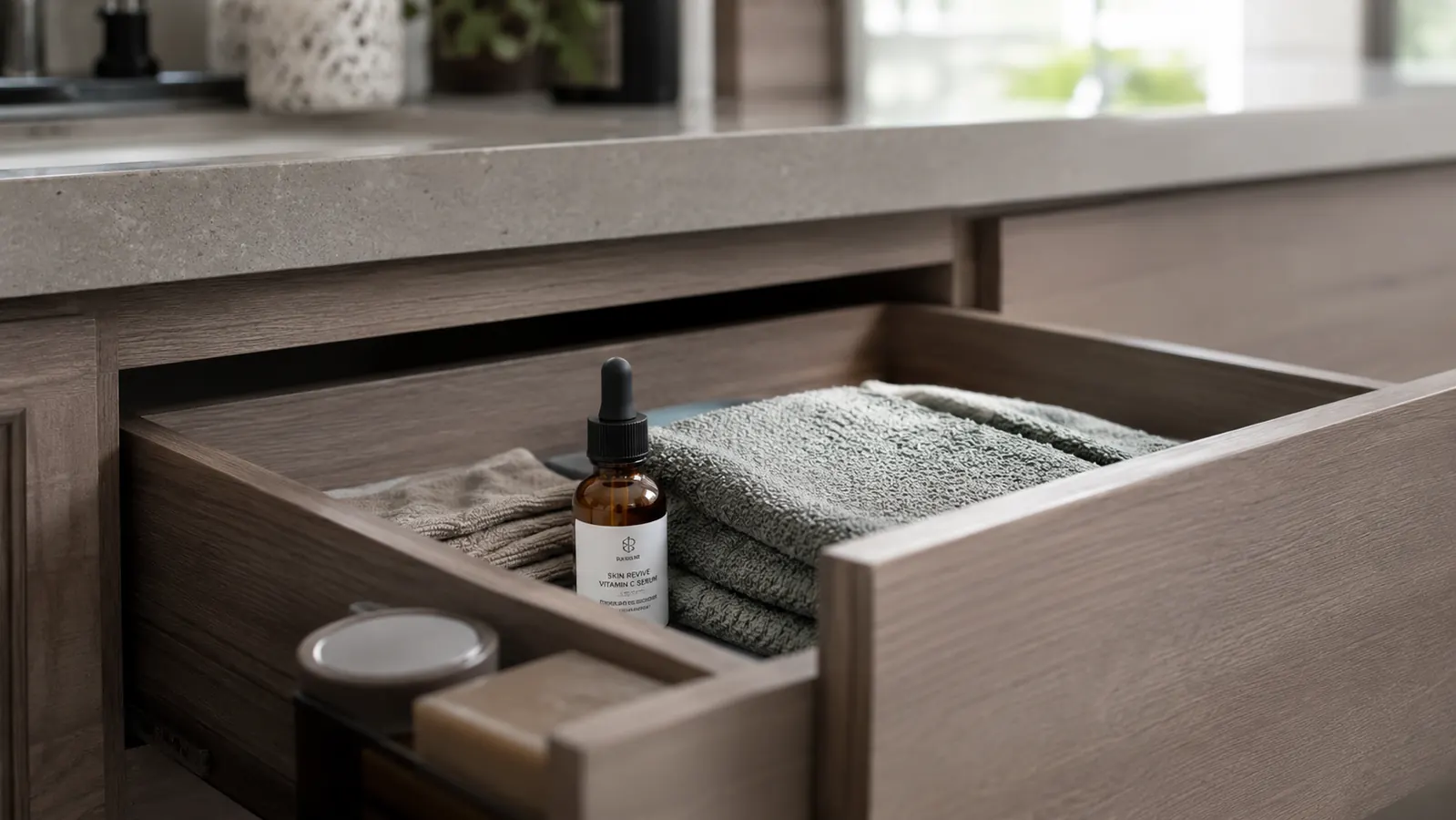
Once I understood what was happening chemically, I changed how I stored the bottle, and I noticed a real difference in how slowly the color shifted afterward. I moved it out of the bathroom entirely, since bathrooms run warm and humid and get direct light through most windows for at least part of the day, both of which accelerate oxidation. It now lives in a shallow drawer in my bedroom dresser, out of sunlight, at a steady room temperature, and I only bring it out for the thirty seconds it takes to apply it each morning.
A few readers have asked whether the refrigerator helps. It can slow the chemical reaction slightly, but the temperature swings every time you open the fridge door work against you, and a cold serum on a chilled morning isn't exactly a comfortable way to start the day when you're already stiff from arthritis. My honest recommendation is a cool, dark drawer, cap tightened firmly after every use, and a bottle you plan to finish within about two to three months of opening rather than one that lingers half-used for half a year in a sunny bathroom.
What It Actually Did for My Skin
Setting the scent and the storage quirks aside, TruSkin did what a vitamin C serum is supposed to do for skin like mine. The sun spots across my cheekbones looked noticeably softer by week six, not gone, but less sharply defined against the surrounding skin, and my overall tone looked more even in regular daylight rather than under a bathroom's flattering vanity bulbs, which is the light I actually trust.
The hyaluronic acid in the formula also did quiet, useful work underneath the vitamin C. My skin felt plumper by mid-morning, less likely to show that dry, crepey texture along my jawline that shows up by early afternoon on a normal day. I didn't get any stinging or redness, which matters a great deal at my age, since my skin barrier isn't as forgiving of actives as it was twenty years ago.
What TruSkin did not do was erase anything. The deeper, longer-set sun spots on the backs of my hands barely budged in ten weeks, and I don't think any serum at this price point, or honestly at most price points, was ever going to touch those. If your expectation walking in is dramatic before-and-after transformation, you're setting yourself up to be disappointed by a product that's actually doing a perfectly reasonable job for what it is.
Alternatives I Considered Before Committing
Before I settled on TruSkin for this test, I seriously considered a couple of pricier department-store options, largely because I assumed a higher price meant a more stable formula and less oxidation drama. I ended up writing a full side-by-side comparison against Obagi's Professional-C serum if you want the longer breakdown of strength, sensitivity, and value between the two, because the short version doesn't do the tradeoffs justice.
I also went back and read my own three-month tracking review of this same TruSkin bottle, which focuses more on the week-by-week brightening results than on what's covered here. The two pieces are meant to sit side by side: that one tells you what changed on my face, this one tells you what I wish I'd known about the bottle itself before I opened it.
What I Liked
- Visible brightening on surface-level sun spots within six weeks
- Hyaluronic acid keeps skin from feeling tight or dry after application
- No stinging or irritation on sensitive, mature skin during the full test
- Reasonable cost relative to department-store vitamin C serums
- Soft dropper bulb and readable label are easy on stiff, arthritic hands
- Absorbs quickly with no greasy residue under makeup or sunscreen
Where It Falls Short
- Noticeable scent on opening that some people find unpleasant
- Formula oxidizes and darkens faster than serums in airless pump packaging
- Dropper bottle design speeds up air exposure with every use
- Deeper, long-set sun spots on hands showed little to no change
- Best results require finishing the bottle within two to three months of opening
A darker bottle by week eight isn't proof something went wrong. It's proof the vitamin C was ever actually active in the first place.
Who This Is For
TruSkin makes sense for someone who wants a genuine entry point into vitamin C without a big financial commitment, who has mild to moderate sun spots and uneven tone rather than deep, decades-old discoloration, and who's willing to store the bottle properly and use it up within a couple of months rather than letting it sit half-finished in a sunny bathroom for a year. If you're new to vitamin C serums altogether and want to see whether your skin even likes the category before spending more, this is a sensible place to start. It's also a reasonable pick if stiff hands or fumbling with tiny caps has made you avoid certain serums entirely, since the dropper here is genuinely easy to manage.
Who Should Skip It
If you have a sensitive nose or a history of reacting to lightly fragranced skincare, the opening scent alone might be a dealbreaker before you get to the results. And if you're hoping a single serum will fade sun spots that have been on the backs of your hands for twenty years, TruSkin, and most vitamin C serums at any price, will leave you underwhelmed. That's not a knock on the product so much as an honest ceiling on what topical vitamin C can realistically do once discoloration has set that deep. If you also know you're the type to buy a serum and let it sit half-used on a sunny windowsill for eight months, you'll get less out of this one than someone who commits to finishing the bottle on schedule.
Know what you're getting into before the bottle arrives
The scent fades in a minute and the brightening is real if you store it right and use it up in time. See today's price on TruSkin's Vitamin C Serum on Amazon.
Amazon Check Today's Price on Amazon →